There are very few public transport routes in the world that are considered standalone tourist attractions. Usually, a train ride is simply a means to an end—a way to get from point A to point B. However, in Sri Lanka, the railway journey from the cultural capital of Kandy to the sleepy mountain town of Ella is an exception to the rule. Widely regarded by travel bloggers, photographers, and guidebooks as one of the most scenic and beautiful train rides in the entire world, this journey is an absolute must-do for anyone visiting the tear-drop island.
Traveling at a delightfully sluggish pace, the iconic blue train chugs its way through the heart of Sri Lanka’s Hill Country. It offers passengers a front-row seat to a mesmerizing, ever-changing landscape of lush green tea plantations, dense pine forests, cascading waterfalls, and dramatic mountain peaks. This guide will walk you through everything you need to know about the Kandy to Ella train ride, from buying tickets and choosing the best class, to the highlights you simply cannot miss along the way.
The Route: A Journey Through the Clouds
The railway line was originally constructed by the British colonial government in the late 19th century. Its primary purpose was not tourism, but rather logistics: it was built to transport massive quantities of tea and coffee from the high-altitude estates down to the capital city of Colombo for global export. Today, while it still serves local commuters, it has become a legendary route for backpackers and luxury travelers alike.
The complete journey from Kandy to Ella covers approximately 140 kilometers (87 miles). Because the train has to navigate steep gradients, winding mountain passes, and numerous tunnels, the journey is slow, typically taking anywhere from six to seven hours. But the slow pace is exactly the point. It forces you to disconnect, hang your feet out the door, feel the cool mountain breeze on your face, and simply watch the world roll by in a cinematic panorama.
Choosing Your Class: How to Travel
The Sri Lankan railway system offers several different classes of travel on this route. Your choice will drastically affect your experience, and counter-intuitively, the most expensive option is not always the best for tourists.
First Class (Air-Conditioned)
First-class carriages offer plush, reserved seating, air-conditioning, and occasionally, an observation car with large windows at the rear of the train. While it is undeniably the most comfortable way to travel, it comes with a significant drawback for photographers: the windows and doors are sealed shut to keep the air conditioning in. You cannot hang out of the doorways to feel the breeze or take unobstructed photos.
Second Class (Reserved and Unreserved)
For the vast majority of travelers, Second Class is the sweet spot. The seats are cushioned and relatively comfortable. The crucial difference is that the windows can be pushed up, and the main carriage doors are usually left wide open for the duration of the journey. This allows you to sit in the doorway—the quintessential Sri Lankan train experience. You can buy reserved tickets (which guarantee you a seat) well in advance, or unreserved tickets on the day of travel (which means you might be standing for a portion of the journey if it is crowded).
Third Class (Reserved and Unreserved)
Third class is the most budget-friendly option and is heavily utilized by locals. The benches are harder and the carriages can get incredibly crowded. However, it offers the most authentic local experience. Like second class, the windows and doors are open. If you are adventurous and don’t mind a lack of personal space, third class can be a vibrant, chaotic, and highly memorable way to travel.
Securing Tickets: A Test of Patience
Because of its global fame, securing a reserved seat on the Kandy to Ella train can be one of the most frustrating parts of planning a Sri Lankan trip. Reserved tickets go on sale 30 days before the date of departure and frequently sell out within hours, especially during the peak tourist season (December to March).
If you miss out on reserved tickets, do not panic. You can always buy unreserved second or third-class tickets at the station on the day of departure. The catch is that they never sell out of unreserved tickets, meaning the train can become extremely packed. If you are traveling unreserved, it is highly recommended to board the train at Peradeniya station (just before Kandy) or get to Kandy station very early to sprint for a seat.
Highlights Along the Tracks
The scenery is spectacular from the moment you leave Kandy, but the landscape becomes increasingly dramatic as the train climbs higher into the mountains. Keep your camera ready for these key highlights:
Hatton and Adam’s Peak
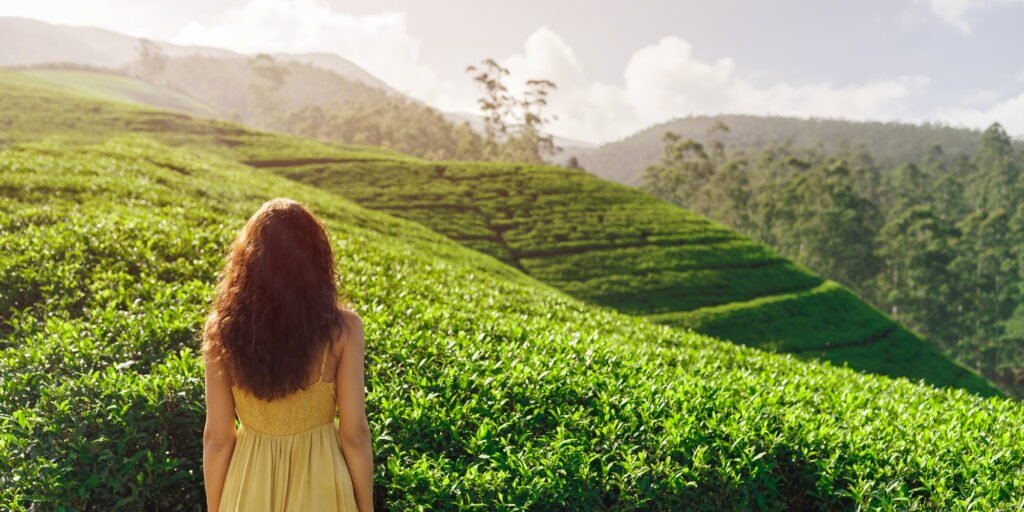
As the train approaches Hatton, you will see vast expanses of emerald tea bushes rolling over the hills like a carpet. Hatton is a major transit hub for pilgrims and hikers attempting to climb Adam’s Peak (Sri Pada). On a clear day, you might catch a glimpse of the sacred mountain looming in the distance.
Nuwara Eliya (Nanu Oya Station)
Nanu Oya is the station serving Nuwara Eliya, the highest town in Sri Lanka. As you reach this altitude, the air becomes noticeably crisp and cool. The landscape here is often shrouded in mist, dotted with colonial-era British bungalows, giving it the nickname “Little England.” Many travelers choose to break up their journey by disembarking here for a night or two before continuing to Ella.
Horton Plains and Pattipola
Shortly after Nanu Oya, the train passes through Pattipola, which holds the record as the highest railway station in Sri Lanka (over 1,890 meters above sea level). The train chugs through thick, moody pine forests and skirts the edges of the Horton Plains National Park, an area of stunning biodiversity.
The Approach to Ella
The final hour of the journey as you descend towards Ella is arguably the most breathtaking. The train hugs the edges of sheer cliffs, offering dizzying views down into the valleys below. The vegetation shifts back to a more tropical feel as you approach your final destination.
Tips for the Best Experience
- The Best Side to Sit: For the first half of the journey (Kandy to Nanu Oya), the right side of the train offers the best views. For the second half (Nanu Oya to Ella), the left side is generally considered superior. If you are sitting in the open doorways, you can easily switch sides!
- Snacks on Board: You do not need to pack a massive lunch. Throughout the journey, local vendors walk up and down the aisles selling delicious, freshly made snacks. You can buy warm samosas, spicy lentil fritters (vadai), fresh fruit, and sweet tea right from your seat.
- Safety First: Sitting in the open doorway with your legs dangling over the tracks is thrilling, but it requires common sense. The train occasionally passes very close to rock walls, tunnels, and signal posts. Always hold on tightly, be hyper-aware of your surroundings, and pull your legs and camera in when approaching tunnels or narrow cuttings.
Conclusion
The train ride from Kandy to Ella is much more than a transit route; it is a vivid, moving window into the soul of Sri Lanka. It is a journey that engages all your senses: the rhythmic clacking of the wheels, the smell of fresh tea leaves and damp pine, the taste of spicy street food, and the sight of incredibly friendly locals waving from the fields. It is a slow, romantic, and profoundly beautiful experience that will likely remain one of the absolute highlights of your time in Sri Lanka.