When you imagine a world-class wildlife safari, the vast savannas of East Africa or the dense jungles of the Amazon usually come to mind. However, tucked away in the Indian Ocean, the small island nation of Sri Lanka quietly boasts some of the most spectacular, accessible, and diverse wildlife viewing opportunities on the planet. Recognized globally as a biodiversity hotspot, Sri Lanka has an astonishingly high rate of endemism, meaning many of the species found here cannot be found anywhere else on Earth.
What makes Sri Lanka truly unique is the incredible density of its wildlife combined with its geographical compactness. In a single two-week trip, you can watch the largest animal on earth (the blue whale) swim in the deep ocean, and then, just a few hours later, photograph the apex predator of the jungle (the leopard). From massive herds of elephants to elusive bears and incredibly rare birds, here is your ultimate guide to experiencing the wonders of Sri Lanka’s wildlife.
Sri Lanka’s “Big Five”
Africa has its famous “Big Five,” and Sri Lanka has successfully adopted this concept to highlight its own apex species. Tracking down the Sri Lankan Big Five is the ultimate goal for many wildlife enthusiasts visiting the island.
1. The Sri Lankan Leopard
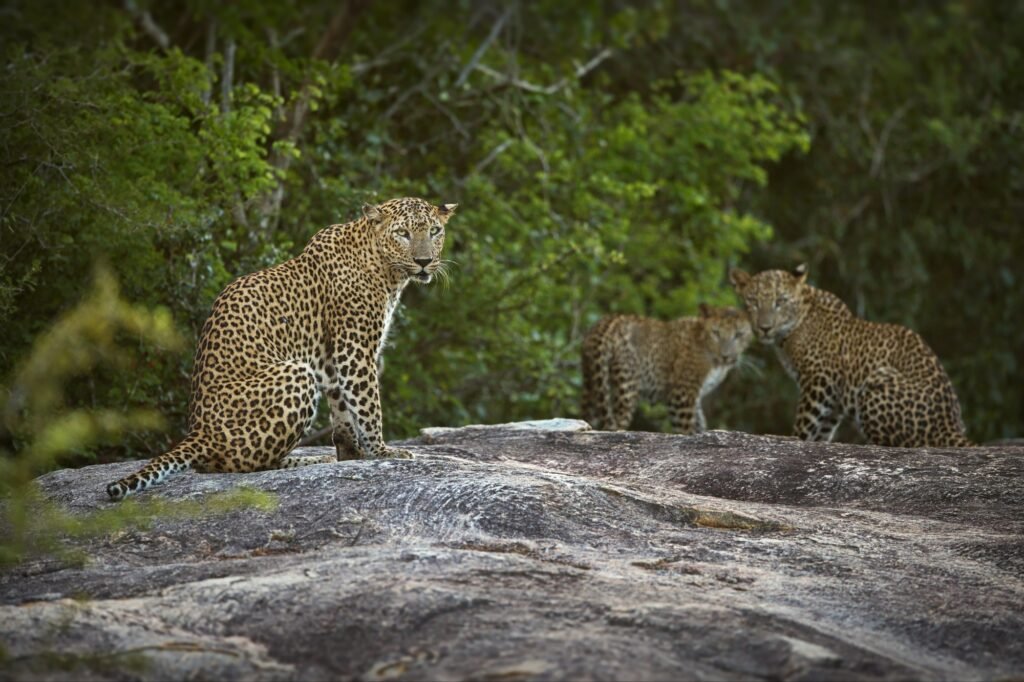
The undisputed king of the Sri Lankan jungle is the leopard (Panthera pardus kotiya). Because tigers and lions do not exist on the island, the leopard sits at the very top of the food chain. This lack of competition has allowed them to become bolder and more diurnal (active during the day) than their counterparts in Africa or India, making them much easier to spot. They are most commonly seen resting on large granite boulders or slinking through the scrub jungle in search of prey like spotted deer or wild boar.
2. The Asian Elephant
The Asian elephant is deeply intertwined with Sri Lankan culture, history, and religion. Despite their massive size, they are incredibly graceful creatures. Sri Lanka boasts the highest density of wild elephants in Asia, with an estimated population of over 5,000. Watching a family herd interact—with protective mothers guiding playful calves—is a heartwarming and unforgettable experience.
3. The Sloth Bear
The Sri Lankan sloth bear is perhaps the most elusive member of the Big Five. Characterized by their shaggy black coats, long snouts, and distinct white chest markings, these nocturnal creatures are incredibly shy. Your best chance of spotting one is during the dry season (usually May to July) when they venture out to feast on the sweet, fallen fruit of the Palu tree, a local delicacy they absolutely cannot resist.
4. The Blue Whale
Sri Lanka’s wildlife extends far beyond its shores. The deep, nutrient-rich waters off the southern and eastern coasts are major feeding grounds for the blue whale—the largest animal to have ever lived on Earth. Reaching lengths of up to 30 meters and weighing up to 200 tons, witnessing one of these gentle giants breach the surface and blow a massive spout of water into the air is a truly humbling experience.
5. The Sperm Whale
Sharing the oceanic stage with the blue whale is the sperm whale, the largest toothed predator on the planet. These deep-diving giants are often seen in massive pods off the coast of the Kalpitiya peninsula in the northwest, particularly between November and April.
The Best National Parks for Safaris
Sri Lanka has 26 national parks, each offering a distinct ecosystem and different wildlife viewing opportunities. Here are the top parks you must consider for your itinerary:
Yala National Park
Located in the southeast, Yala is Sri Lanka’s most famous national park. It is a stunning mix of scrub jungle, grassy plains, and coastal lagoons. Yala’s main claim to fame is its leopard population; it is widely considered to have one of the highest densities of leopards in the world. It is also an excellent place to spot elephants, crocodiles, water buffalo, and the elusive sloth bear.
Udawalawe National Park
If your primary goal is to see elephants, Udawalawe is the place to go. The park’s landscape is much more open than Yala, resembling an African savanna, which makes spotting wildlife incredibly easy. It is practically guaranteed that you will see large herds of elephants here, often bathing and playing in the Udawalawe Reservoir. The park is also famous for its vibrant birdlife, particularly raptors like the changeable hawk-eagle.
Wilpattu National Park
Located in the northwest, Wilpattu is Sri Lanka’s largest and oldest national park. It is characterized by “villus”—natural, sand-rimmed water basins that fill up with rainwater. Wilpattu is much less crowded than Yala, offering a wilder, more serene safari experience. It is an excellent place to spot leopards and sloth bears, though the dense forest canopy makes spotting them slightly more challenging than in the open scrub of Yala.
Minneriya National Park and “The Gathering”
Minneriya, located in the Cultural Triangle, hosts one of the most spectacular wildlife events in the world, known simply as “The Gathering.” During the dry season (typically August and September), water sources in the surrounding areas dry up, forcing hundreds of elephants to converge on the receding shores of the Minneriya tank (an ancient, man-made reservoir) to drink, bathe, and socialize. Seeing upwards of 300 elephants in one place is a breathtaking spectacle.
A Paradise for Bird Watchers
While the Big Five get most of the attention, Sri Lanka is also a world-renowned destination for ornithologists and amateur bird watchers. The island is home to over 400 species of birds, including 34 endemic species that can only be found in Sri Lanka.
The Sinharaja Forest Reserve, a UNESCO World Heritage Site and the country’s last viable area of primary tropical rainforest, is the ultimate destination for spotting endemics like the Sri Lanka Blue Magpie, the Red-faced Malkoha, and the Green-billed Coucal. Coastal areas like Bundala National Park (a Ramsar wetland site) are vital wintering grounds for migratory waterbirds, where you can see massive flocks of greater flamingos, pelicans, and painted storks.
Ethical Wildlife Tourism in Sri Lanka
As wildlife tourism grows in Sri Lanka, it is crucial to travel responsibly to protect these fragile ecosystems and the animals that inhabit them.
- Choose Safaris Wisely: When booking a jeep safari, ensure your driver adheres to park rules. They should not speed, go off-road, or crowd animals to get a better photo. Respecting the animal’s space is paramount.
- Avoid Elephant Riding: Riding elephants or watching them perform unnatural tricks in shows causes severe physical and psychological trauma to the animals. Instead, opt to see them in the wild on a safari, or visit an ethical sanctuary like the Elephant Transit Home in Udawalawe, where orphaned calves are rehabilitated and released back into the wild.
- Responsible Whale Watching: Choose whale watching operators who follow international guidelines. Boats should maintain a respectful distance from the whales, approach them slowly, and never cross their path or attempt to feed them.
Conclusion
A wildlife safari in Sri Lanka offers a raw, thrilling connection to nature that is hard to find anywhere else in Asia. The sheer variety of habitats, from the deep ocean to the misty rainforests and dry scrublands, ensures that every day brings a new discovery. Whether you are locking eyes with a wild leopard, marveling at the size of a blue whale, or watching a baby elephant clumsily learn to use its trunk, the wildlife of Sri Lanka will leave an indelible mark on your soul.